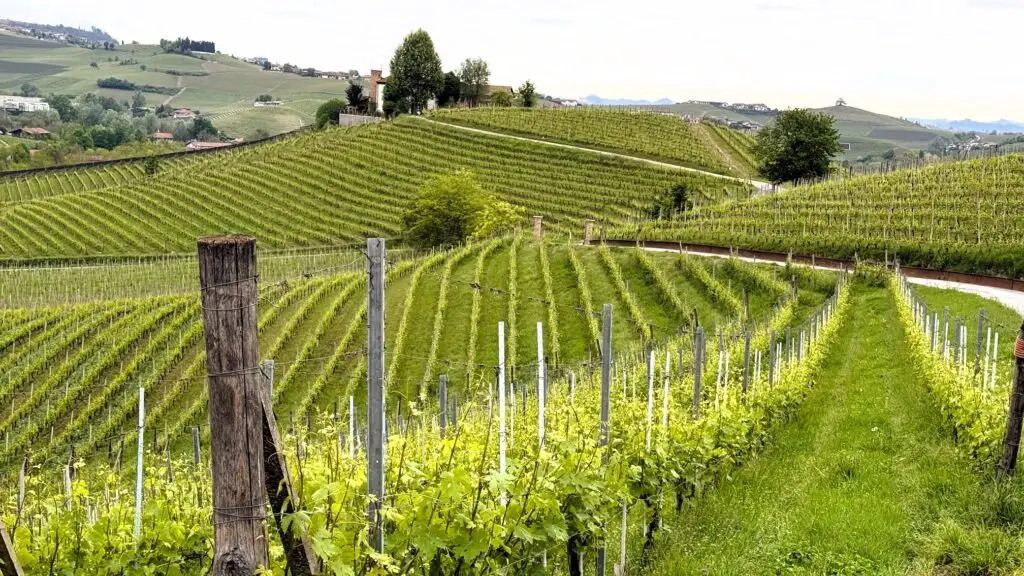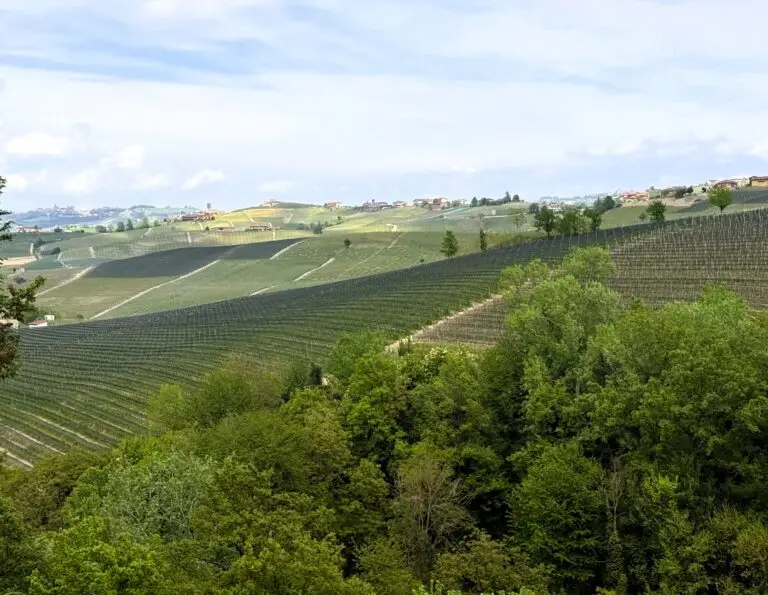
The hills stretched out in ordered rows, each line set with a care that felt almost too precise to be natural. The light rested on the vines in a way that made everything feel settled. Then, underneath it, the low hum of tractors. Not loud or distracting, but steady enough to remind us that nothing here is at rest.
After lunch and a glass of Barolo, we took a slow drive along the narrow roads that curve and open to one beautiful view after another. We stopped at an overlook somewhere between Barolo and Monforte d’Alba. At first, it is easy to take it in as a visitor. It can feel as though the land is simply offering itself to be enjoyed. However it did not take long to realize that this is not a backdrop. This is a place where work is constant, necessary and year around.
So while we sipped Barolo at lunch, someone nearby was repairing a sprayer, tying shoots, checking mildew pressure, moving barrels, or scheduling pickers. The work does not pause because the light is good or the view is admired. It is set by the condition of the vines, the weather, and the narrow window in which each task must be done.
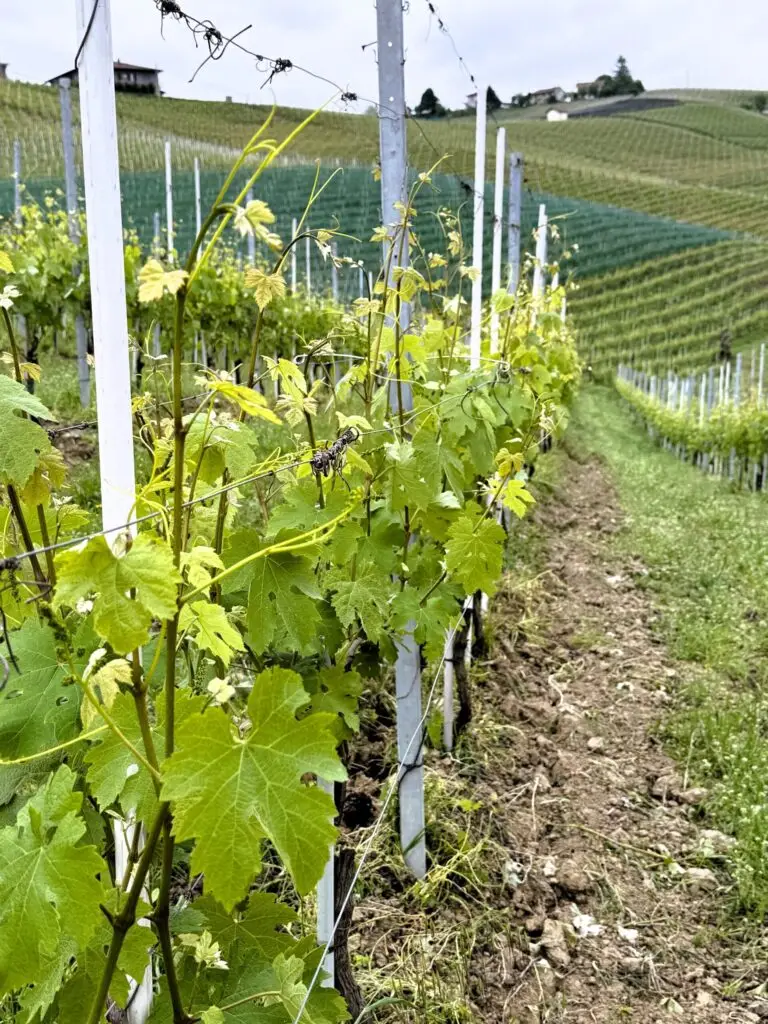
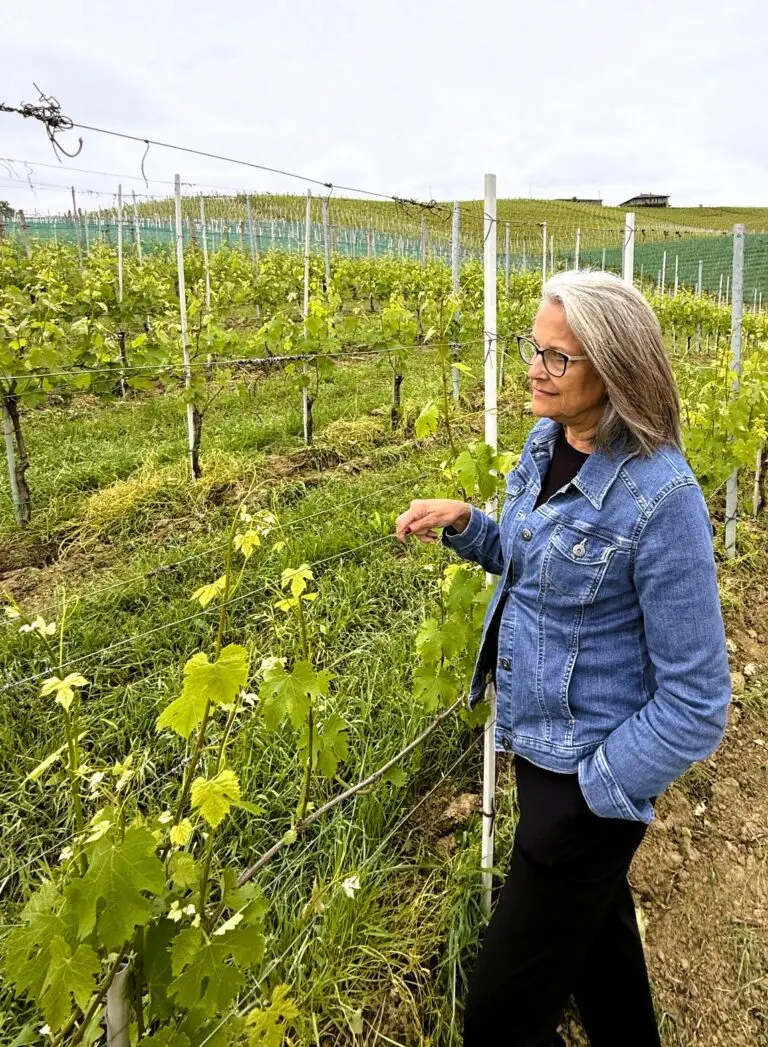
Tending the Vines
Standing there, I found it all very familiar, having been involved in agriculture most of my life. I noticed the spacing without thinking about it, read the soil for more than its color, and understood how quickly a stretch of weather can undo careful work. Different crops, different language, different landscape, but the same understanding that the land responds to attention and care, not to good intentions. You tend it consistently, work within the limits you are given, and accept that growth itself is not something you control.
As we continued looking across the rows, I noticed how intentionally these vines are managed. The viticulturist does not allow them to grow in every direction. He cuts them back, guides them along wires, and shapes them over time so that the energy of the plant goes where it is meant to go. If left alone, the vine will grow aggressively but produce very little of value. The pruning, which can look severe to someone unfamiliar with it, is what makes the harvest possible.
Tending the Soul
In my own life, my faith has taught me to expect this type of pruning as well. The same care that shapes a vineyard is the care Christ brings into my life. He will remove what I think I may need, because he knows it will not bear fruit. He will strengthen what will, and tend what I leave unattended. Growth is slowed or redirected. It may not be comfortable or optional. Yet over time, when I stop resisting, I understand the hand doing the pruning is not careless. It is purposeful, patient, and far more interested in lasting fruit than in temporary fullness.
So the beauty of those hills is not simply in how they look. It is in what has been done to them, season after season, by hands that understand both the cost and the outcome. What grows in these fields does not happen by chance. It comes from careful attention, patience, and a willingness to do the work so that the vines continue producing far into the future.
When we sat down with another glass of Barolo later, we agreed it was not just something to enjoy. Our “Salute” that evening carried more meaning.
Until Next Time,
Catherine