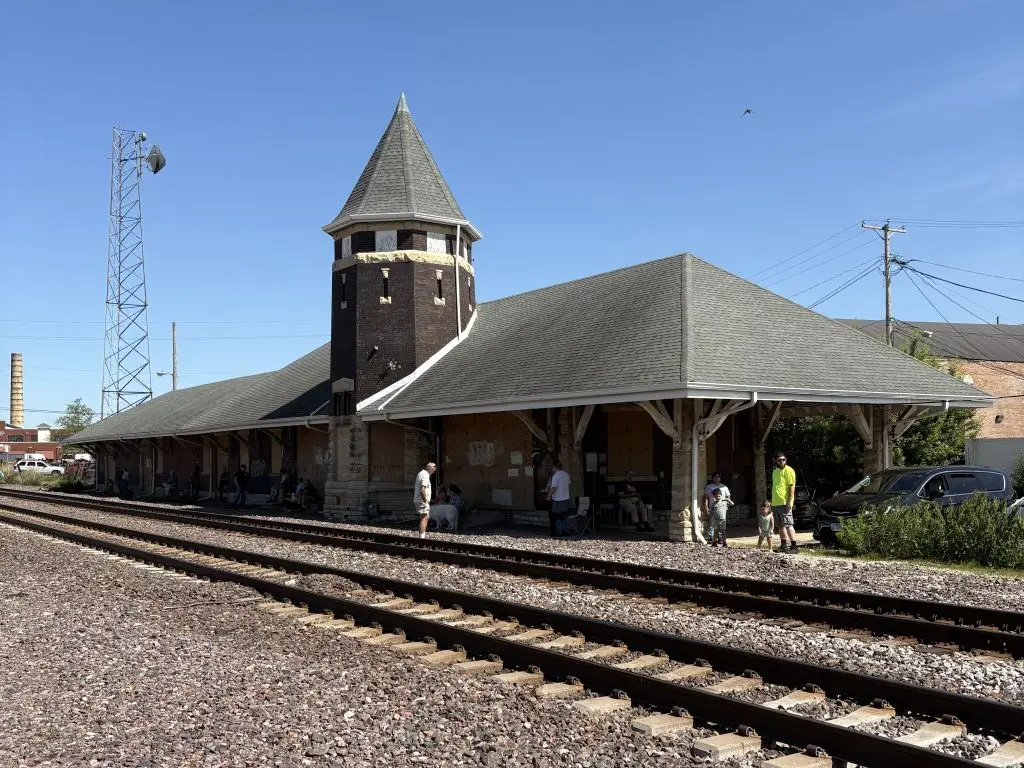
On June 2, 2026, I drove to DeKalb, Illinois to railfan Union Pacific’s Big Boy locomotive roll through town on its eastern transcontinental tour. I chose DeKalb for two reasons: the historical passenger depot and downtown grade crossings. The station was built in 1891 in Richardsonian Romanesque style, brick and stone with a tower facing the tracks. It is the kind of building that reminds you railroading once was the center of attention and community.
The city also has several grade crossings in close succession through downtown. Engineers are required to sound the horn at each one in a specific pattern: two long blasts, a short, then a final long blast as the locomotive crosses the road. More crossings mean more whistles. I wanted to hear and feel the full impact of the locomotive running at speed, not standing still.
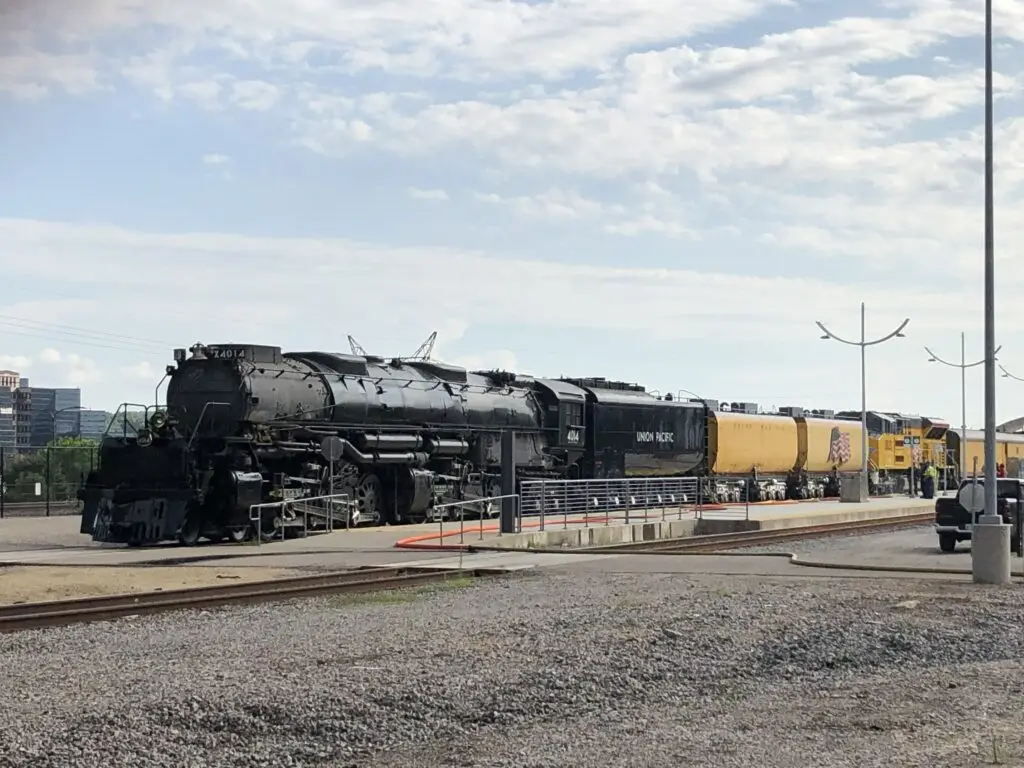
My first and only previous sighting was in Saint Paul in 2019, when the Big Boy was on static display following its six year restoration. Seeing a locomotive that size sitting motionless is impressive. Watching it move is something else entirely.
My Interest in Railroading
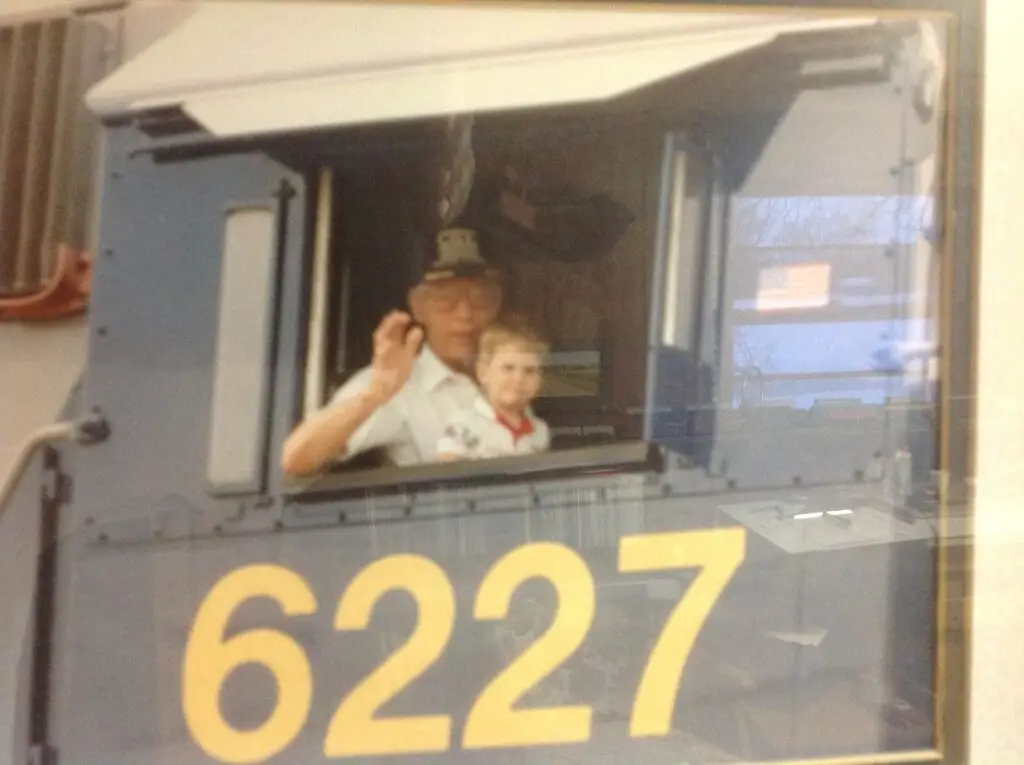
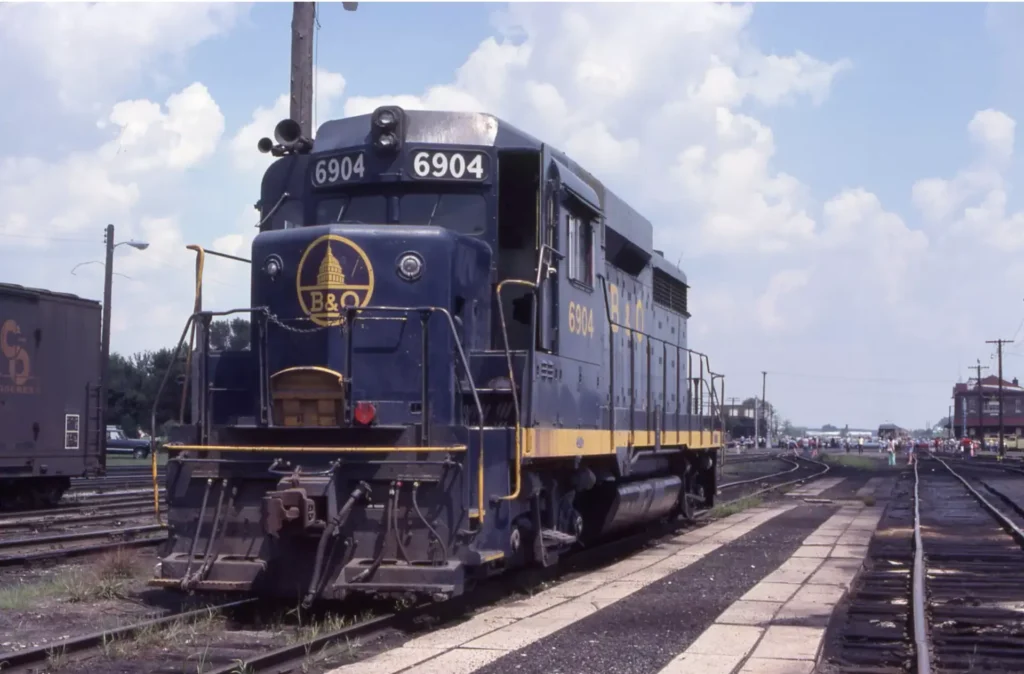
My interest in railroading did not start at that display. It started at home in Auburn, Indiana, fifty five years earlier. My father was a Baltimore and Ohio locomotive engineer who boarded his train in Garrett, Indiana, running the line between Willard, Ohio and Chicago. Growing up, I could hear him blow the whistle on the diesel he operated as he passed through Auburn. Hearing that sound again in DeKalb, from a steam whistle built in the same era my father was learning his trade, brought that back in a way I did not expect.
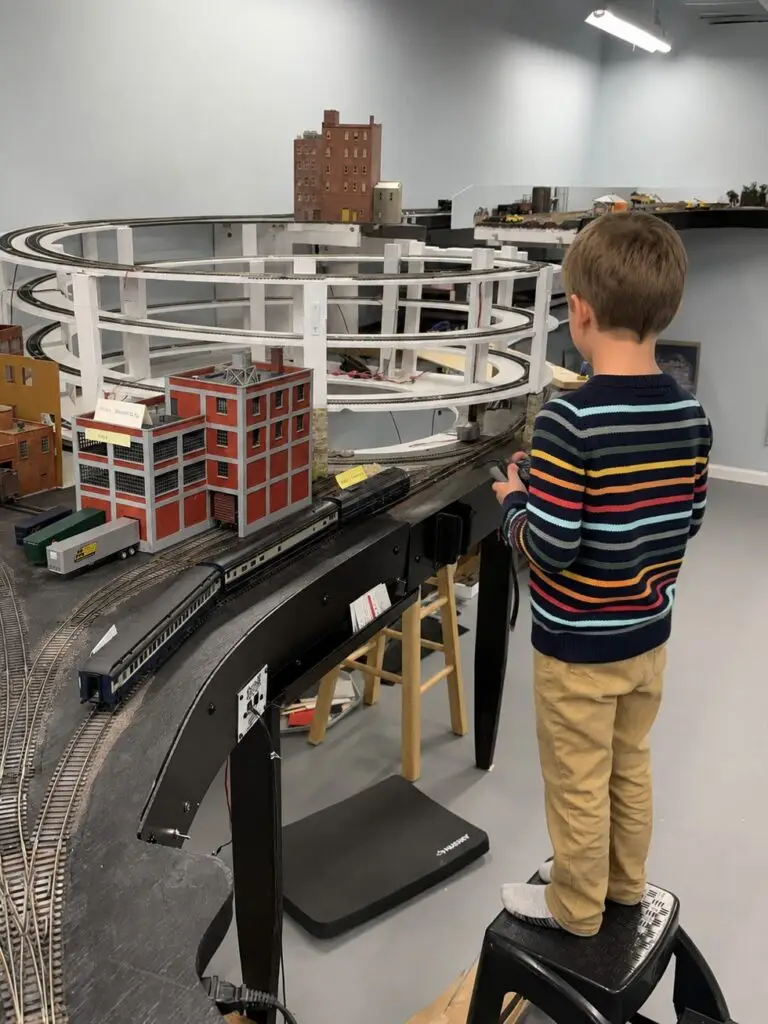
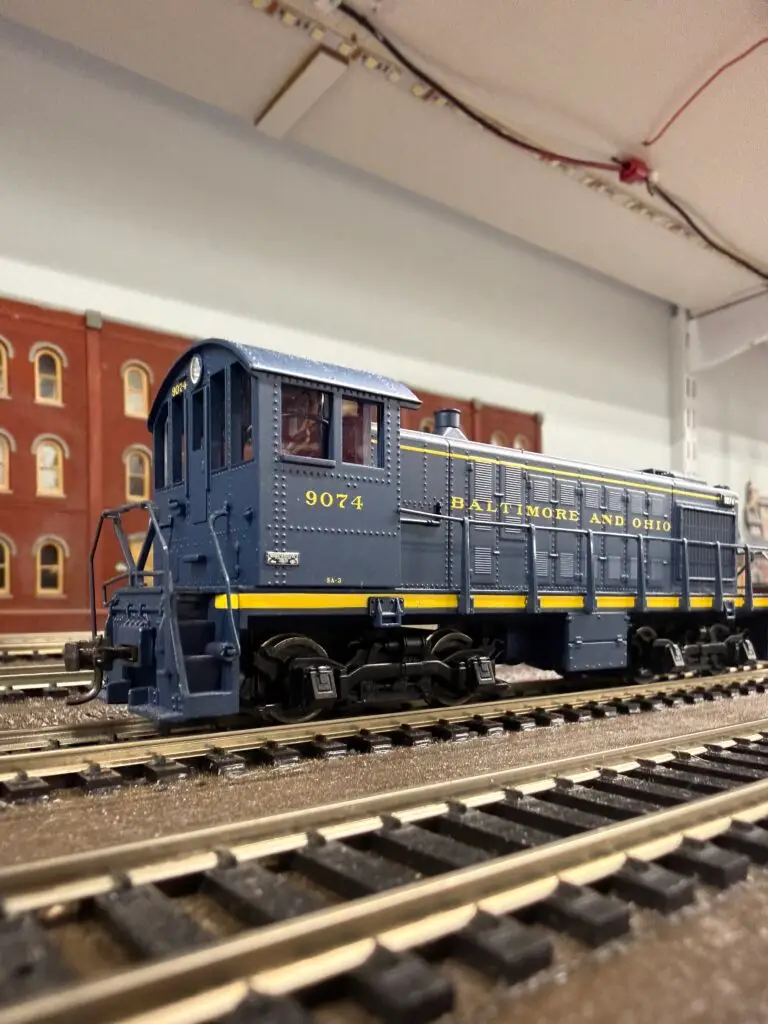
I have been building and running model railroads since fourth grade, almost entirely because of my father. Today I model the B&O in a 900 square foot room in our house. My six year old grandson runs trains with me now.
What the Big Boy Is
Twenty five Big Boys were commissioned exclusively for Union Pacific Railroad, with the first delivered in 1941. They were built to haul freight over the Wasatch Mountain Range between Ogden, Utah and Green River, Wyoming. That stretch of track presented a serious engineering problem: the eastbound grade through Utah’s Wasatch Mountains was steep enough that it took multiple locomotives to move a single heavy freight train over the summit. The Big Boy solved that problem with an articulated design, essentially two steam engines mounted on a single frame, producing enough power to handle those grades alone with only one crew.
The Big Boys are 133 feet long and weigh 1.2 million pounds. For comparison, that is longer than two city buses and heavier than a Boeing 747. Because of their great length, the frames are hinged, or articulated, to allow them to negotiate curves.
Most of the 25 were eventually scrapped. Eight survive, with seven on static display at museums across the country in St. Louis, Dallas, Omaha, Denver, Scranton, Green Bay, and Cheyenne. Number 4014 is the only one still in operation.
Why Steam Is Different
Diesel locomotives do their work out of sight with an internal combustion engine and generator. The engine is enclosed, the mechanics are hidden, and to a bystander the locomotive simply moves. Steam locomotives work in public. The pistons, the drive rods, the valve gear, all of it is visible and in motion at speed. Watching a steam locomotive run is watching machinery solve a problem in real time. You can see exactly how the power transfers from steam pressure to wheel movement. For anyone who has ever wanted to understand how something works, steam locomotion is as clear a demonstration as exists in mechanical engineering.
The Big Boy 4014 running at track speed in DeKalb made that point more forcefully than any static display could.
The Day in DeKalb Railfanning the Big Boy
I arrived in DeKalb about an hour before the Big Boy was scheduled to arrive. I scouted locations to select the best one. I wanted to have the depot in the background, to first observe it coming around a slight curve, and to be on the same side of the double tracks.
This stretch of Union Pacific is double track and one of the busiest main lines in the country. While I waited, four freight trains passed. The sight and sound of those heavy trains moving at 50 miles per hour is breathtaking.
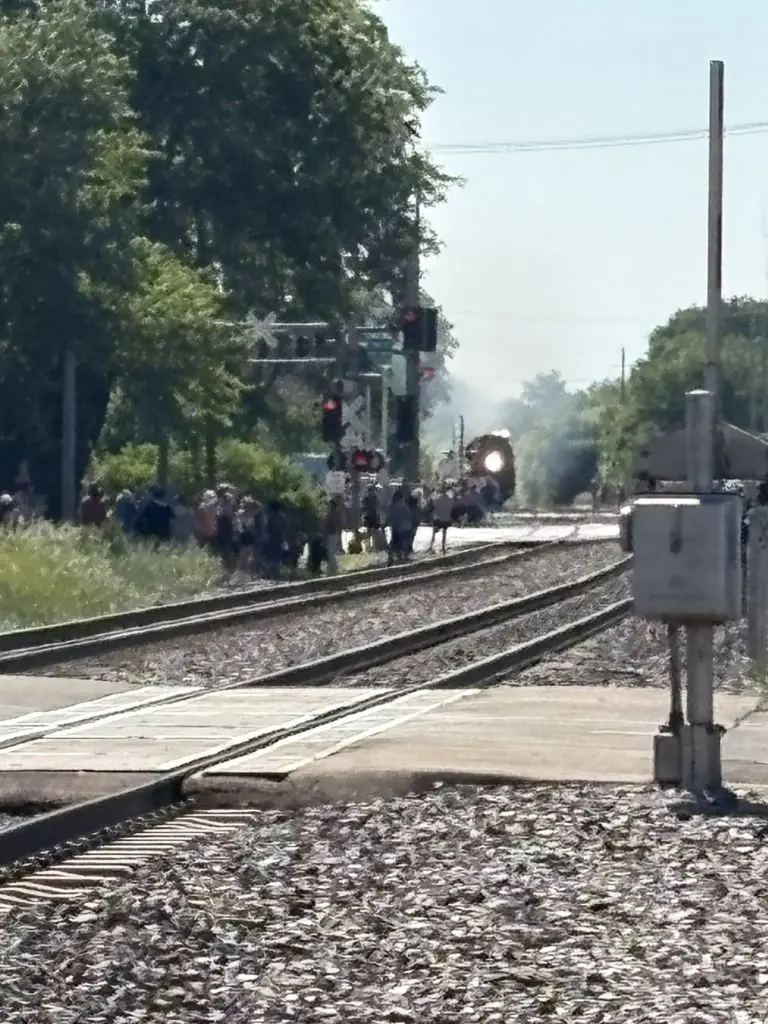
As the time approached, the crowd built. There were all ages of people present to witness this event. Many were so excited they wanted to talk about the Big Boy, prior sightings, and general railroad interests.
I first saw the smoke off to the west, then I heard the whistle. The crowd was buzzing with excitement. Then I saw the engine rounding the curve. Trying to video this with my phone was quite the challenge as the engine approached. This was not only due to the whistle, but the crossing gates clanging as they lowered, the crowd noise increasing, and a helicopter chasing the train filming it. Finally the train passed with a whoosh of displaced air, exhaust steam flying, and the wheels from all the trailing cars clanking and clacking. It was a sensory overload.
The Tour
The 2026 America 250th Birthday tour marks the first time the Big Boy has traveled to the East Coast as part of Union Pacific’s coast-to-coast run. The tour includes a Fourth of July stop in Philadelphia, major display events in eight cities, and more than 50 whistle-stops across 10 states.
It is being called the railfan event of the century. Having seen it in DeKalb, that description is not an overstatement.
My grandchildren will hear about this day for a long time. With any luck, they will be standing trackside with me when it happens again.