

Part One: The Friendships We Didn't Expect
What moving, retirement and an unexpected invitation taught us about making new friends when life no longer puts people in our path.
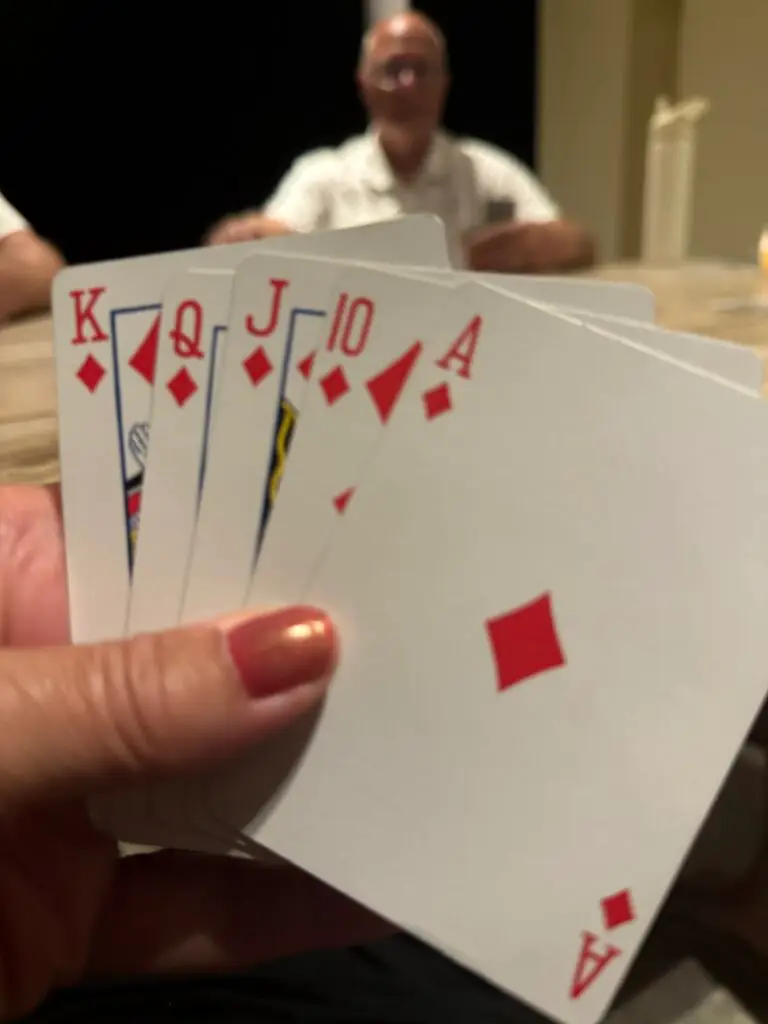
Kerry deals the cards faster than I can sort mine. She knows better than to wait for me. Dude is already refilling glasses around the table with the same easy motion he has repeated many times in our kitchen and in his. We had known them for a while and shared a few social occasions, but our friendship changed two years ago. Today we enjoy dinners, cards and trips together. Kerry and Dude are twelve years younger than us, which puts them only six or seven years older than our own adult children.
A move to a new state prior to retirement
In 2021 we made the decision to turn a temporary situation into a permanent move. We sold the small house we bought in Illinois in 2019 and the house in Minneapolis that was supposed to be our forever home. In December we settled into a new house and life in Roscoe for good.
Doing this did not just mean we left a state. We left a rhythm of easy contact built up over years. The neighbors, the wedding clients, couples from church, the people who overlapped with our life without either of us trying very hard. Michael’s retirement stripped away another layer of that contact. The colleagues who had filled his calendar with people for the past six years.
Covid and other complications
Covid complicated our first two years in Illinois and left us with few real opportunities to develop relationships in a new city and state. Churches were closed, so we could not join or even visit one. No one was inviting people over, and few were eager to visit the home of newcomers they had barely met. It was difficult to return to Minnesota to visit family. Returning meant fourteen days of isolation and a negative test. This was hard to manage when Michael’s job required him in the office every day.
Michael also traveled frequently for work, which made developing relationships even more difficult. He was assigned to an operation in California for six months in 2024. I made the temporary move with him. It was a great experience in many ways, but the isolation and lack of friendships were even more pronounced. One day, in complete frustration, I found myself praying, asking the Lord to open a path. I knew I could not return to Illinois at the end of the assignment without something changing.
What happens to friendships in retirement
Researchers who study retirement point to something they call peripheral social ties but who fill in the middle of a life all the same. Lose enough of them at once, especially in a place where you are still new and at an age when most people already have their circle set, and you realize you are not simply rebuilding friendships. You are rebuilding the structure that once made friendships happen on their own.

Friendship starts with intention
We did not stumble into our friendship with Kerry and Dude. Finding people like them again took more than luck. It took an answer to the heartfelt prayer I said so often in California. The day before we boarded the plane to return to our life in Roscoe, while I was packing boxes, I received a text from Kerry. At that point, they were casual friends we enjoyed seeing now and then. She asked when we would be back, mentioned they were having a dinner party with cards the next night, and asked if we could come. My answer was yes. We arrived at their home twenty minutes after we walked back into our own. A friendship on another level began.
We moved into it with real intention, the kind that means showing up more than once, saying yes to the second invitation and the third. Over time we brought our families into it too. Our grandchildren know them as Miss Kerry and Mr. Dude, and they have spent afternoons swimming in their pool and evenings watching fireworks over the pasture behind their house.

Why age is not an issue in retirement
Kerry had been circling a writing project for two or three years, something that had nothing to do with either of our former careers. One afternoon while Michael and I were away, I sent her a short text telling her the story needed to be heard. She invited me to join her, not to write it for her, but to help her find the words she struggled to say herself. We came to it as equals, learning an entire industry from nothing.
Researchers who study friendships across generations describe this kind of exchange as bidirectional, meaning it moves both ways instead of favoring whoever is older or has lived longer. That description fits us better than the words younger friend or older friend ever could.
Kerry and Dude retired in their late forties, years before most people their age even consider it. That is rare enough that it changes who they can actually spend a weekday afternoon with. We have the same open calendar they do, so we fit into their week in a way people still building careers cannot.
It works the other direction too. We know what it took them to get where they are, and because we have already built lives and careers of our own, there is little reason to measure ourselves against one another. There is nothing left to prove and nothing to protect, so the conversation can go where it wants.


Friendship runs both directions in Retirement
Not every friendship that has taught me something in this stage of life has come with younger friends. My friend Nora is older than I am and already had a full life and an established circle of friends when we moved into her neighborhood. Ten months into her husband’s retirement, she lost him. This was about the same time we arrived, and I was quickly drawn to her.
I watched her work through that grief up close, and what I remember most is not the sorrow, though there was plenty of it. It is the way she kept finding joy even while she was still grieving. Her faith held her up through it, not as a phrase she repeated but as something she actually stood on. She learned to travel with other single women, women in the same season she was in, and she built a full life out of what was left. Nora taught me that losing your footing does not mean losing your life.
Nora was there for me during my own crisis. A family situation left me unable to pray. That did not mean I stopped believing. I simply could not find the words anymore. When I told her this on a walk one day, she said something I have carried ever since. Nora reminded me we all go through seasons like this, and we are allowed to be silent in them. I did not need the right words that day. What I needed that day was someone who understood that having no words was not the same as losing my faith. She had lived long enough to know the difference.

Retirement brings different friendships
Kerry and Dude taught me what a friendship built with intention looks like. Nora taught me what a friendship can hold, even in the seasons when I had nothing to offer back. Between the two of them, I started paying attention to every other friendship in our lives and noticing how differently each one had managed to hold on. Some of what I found surprised me.

Part Two of this series is coming soon. Until then, if you have a story about friendships in your life since retirement, please feel free to contact us below or at info@retirementunscripted.com