Travel has a way of revealing what is real.
A rhythm that only exists at home is not yet a rhythm; it is a circumstance. The moment we leave our familiar surroundings, whatever structure we have built is either carried with us or quietly left behind. This came to light on a recent trip to New Orleans, though in truth, the process begins even earlier.
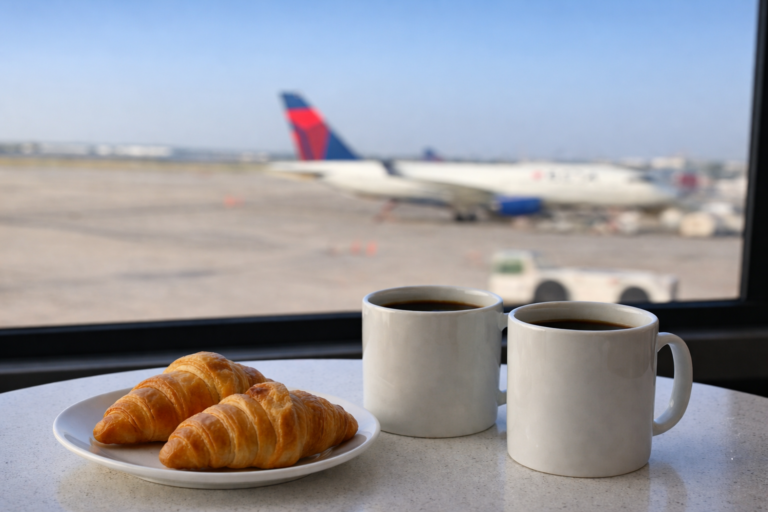
For years, we have followed a simple practice when we travel. We leave for the airport earlier than necessary. This allows time to move through security without urgency and settle into the Delta lounge. There, over breakfast or a light meal, we shift from the mindset of “getting there” to the quieter posture of “going there.” It becomes a small but meaningful transition.
We take a few minutes to ensure our devices are charged, download anything we want to read or watch, and then simply sit without rushing. By the time we walk to the gate, unhurried and ready to board, the trip begins in a different way. Less stress and with intention.
That same intention carried into our days once we arrived.
Mornings in New Orleans came early, not because of an alarm clock, but because neither of us sleeps particularly well when we travel. By the time the city began to stir, we were already out the door, walking toward coffee, moving through quiet streets before the crowds gathered. The pace of the day felt different from home. Yet there was still a pattern to it, a sense that the day was beginning with intention rather than reaction.
That distinction matters more than it seems.
Without some form of rhythm, travel days can slip away just as easily as days at home. Time fills quickly with movement, meals, and activity, yet can feel oddly unanchored by the end of it. We noticed that the same principle applied whether we are in our own kitchen or walking through the French Quarter.
When the day has no structure, it rarely holds its value. The rhythm does not need to look the same, but the presence of rhythm matters.
At home, we are building anchors into our days, small practices that provide steadiness without creating rigidity. Travel does not eliminate those anchors. It simply reshapes them.
A few non-negotiables have become important.
Mornings begin with a sense of grounding. The bed is made, not out of obligation, but as a quiet signal that the day is starting with order. Coffee and breakfast follow, along with a simple conversation about what the day might hold. Even a loose plan provides direction without removing flexibility.
Creating a sense of order in our space has also proven valuable. When we stay more than a couple of nights, we unpack our clothes and toiletries rather than living out of a suitcase. The room feels more settled, and in turn, so do we.
Keeping that space picked up, whether in a hotel or a VRBO, reinforces a sense of calm that carries into the rest of the day.
From there, the day opens.
Walking is become a natural part of our travel rhythm. Starting early allows us to move through places before they are crowded, giving us a quieter experience of wherever we are. Afternoons tend to soften, leaving space to explore more casually, or to rest, read, or write. Lunch often becomes a midpoint, a chance to pause and talk about what we have already seen and what we might want to do next.
Evenings bring their own rhythm. In Bonaire, the six o’clock sunset became a natural moment for gratitude, a pause that marked the close of the day. In New Orleans, that same sense of reflection found its way into evening walks to dinner, where conversation often turned to the best part of the day.
The use of a simple set of questions, something we first used during dinners in Bonaire, has also carried forward and allows conversation to move beyond logistics into something more meaningful.
These practices are not rigid, but they are consistent enough to hold the day together.
What becomes most noticeable, however, is not the travel itself but the return home.
Re-entry has a rhythm of its own, and without it, the transition can feel surprisingly unsettled. The shift from movement back to stillness, from full days to open ones, often creates a quiet disorientation. Many retirees describe this feeling without quite naming it: the contrast between travel and home life can make ordinary days feel flat, while the lack of immediate structure leaves time feeling undefined.
We have learned to approach re-entry with as much intention as the trip itself.
Unpacking happens immediately. Suitcases are opened near the utility room, and laundry is started. The small items of travel, shoes, toiletries, electronics, are returned to their places. Books and art supplies go back to their shelves. Within a short time, the visible signs of travel are cleared, and the house begins to feel like home again.
A simple grocery reset helps as well. Before leaving, we clear what will not last, freezing or sharing what we can. On the drive home, I often place an order for basic groceries so that essentials are waiting when we arrive. The following morning allows for a quick check of what is needed to complete the reset.
The first full day back is intentionally quiet. Mail is sorted, a short list is made of people to reconnect with, and there is space to rest. Water, simple meals, and a slower pace allow both body and mind to catch up with the change in environment.
Quickly our anchors return. The same small rhythms that shape our days at home begin again. The transition is smoother, not because the schedule is strict, but because the foundation is familiar.
Maintaining rhythm in travel and at home.
In these first months of retirement and travel, it has become clear that wherever we go, we need to bring with us the rhythms we are building at home. When we carry that with us, our time away feels steadier, and, in many ways, more restful.
With a trip to Italy ahead, we are paying closer attention to how we order our plans. We have some days scheduled, but we are also leaving time to really notice where we are and the people we meet.
Learning that when our days are anchored, both at home and away, we are less likely to drift and more able to experience each new place, and this new season, with clarity, gratitude, and intention.
Until Next Time,
Catherine
