
We were booked for two tours on our second day in Scotland. Edinburgh Castle came first. Beautifully restored and carefully maintained, it remains an active military base even today. Our guide, Ben, started with a history of the castle going back to 950 A.D. and how to properly pronounce Edinburgh. It is Ed-in-burr. It is not E-din-burrA, nor is it E-din-burg. Correctly pronounced, all is good. Incorrectly, well, if you value your tongue, just learn the correct way.
On to centuries of Scottish history. I will tell you what I remember of it, and I will warn you now that jet lag has no manners when it comes to memory. It barges in, rearranges the furniture in your brain, and leaves you fairly sure of the facts but not entirely sure of the details. So here is my best effort. Lots of kings, lots of conquering, lots of clans, lots of tartans, the Thin Red Line, and the authorizing of the King James Bible. And then more kings and queens. And probably more clans.
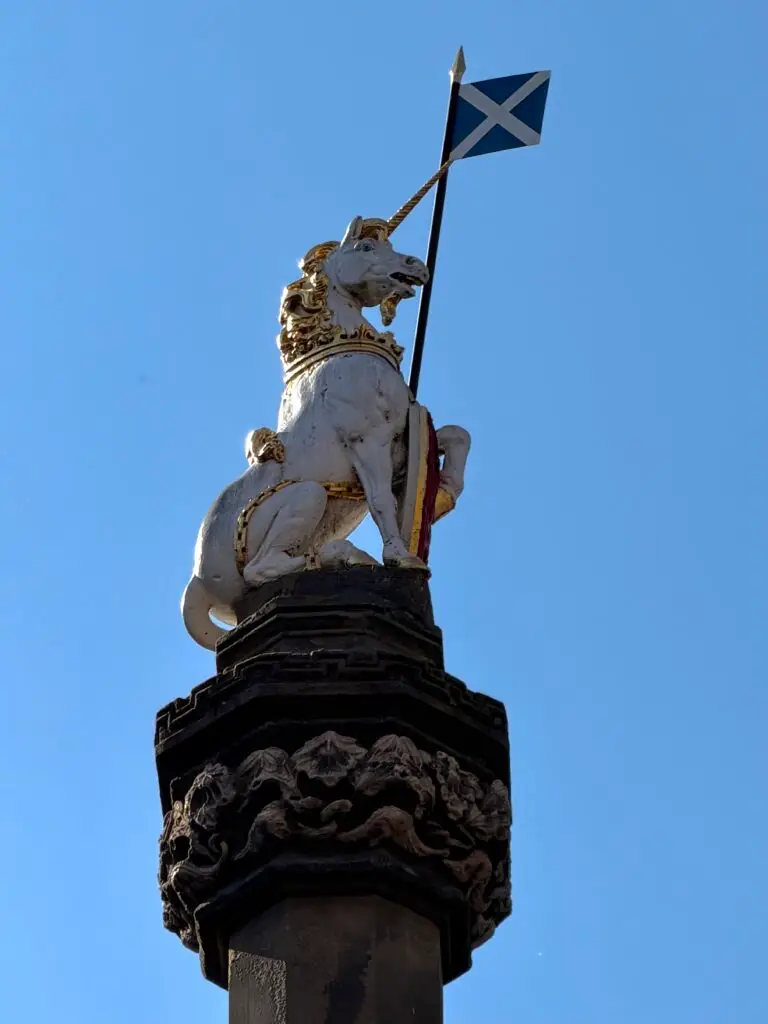
Kings and Clans
About the kings, honestly, the Scots had a hard time settling into British governance. Sometimes their own king or queen ruled them. Often an English king or queen ruled them instead. A bloody mess landed in the middle of it all when the Jacobites tried to put Bonnie Prince Charlie on the throne and failed. Apparently he was better looking than he was skilled at defeating the English. And so it went until the fighting ended, and Scotland became part of the United Kingdom.
Somewhere in there, King James, the sixth of that name in Scotland and the first in England, authorized a new translation of the Bible in 1604. It was published in 1611 and it remains the most widely read version today. He never wrote a word of it himself. He simply gathered the scholars and gave the project his blessing.
The Thin Red Line came from the Crimean War in the 1850s. A war correspondent named William Howard Russell watched the Scottish Highlanders, dressed in red and standing just two ranks deep, hold their ground against a much larger force of charging Russian cavalry. Russell described them as a thin red streak topped with a line of steel, and the phrase stuck. The charge broke and the Russians retreated, and Highland courage earned its place in the history books that day.
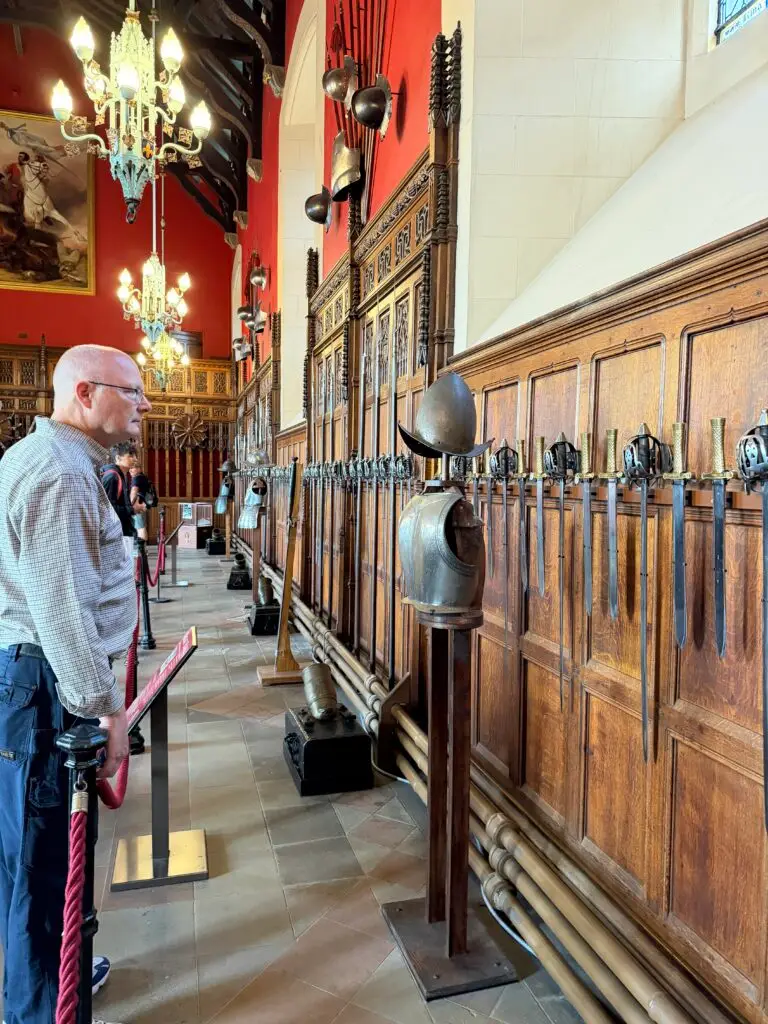
And then there are the clans. So many of them, and so much pride still standing today. Chiefs still exist. Families still gather. People still wear their clan tartan without a hint of self consciousness. I found myself wondering whether, if I traced my family back far enough, I might belong to one of these clans. I don’t think I do, but it was fun imagining it.
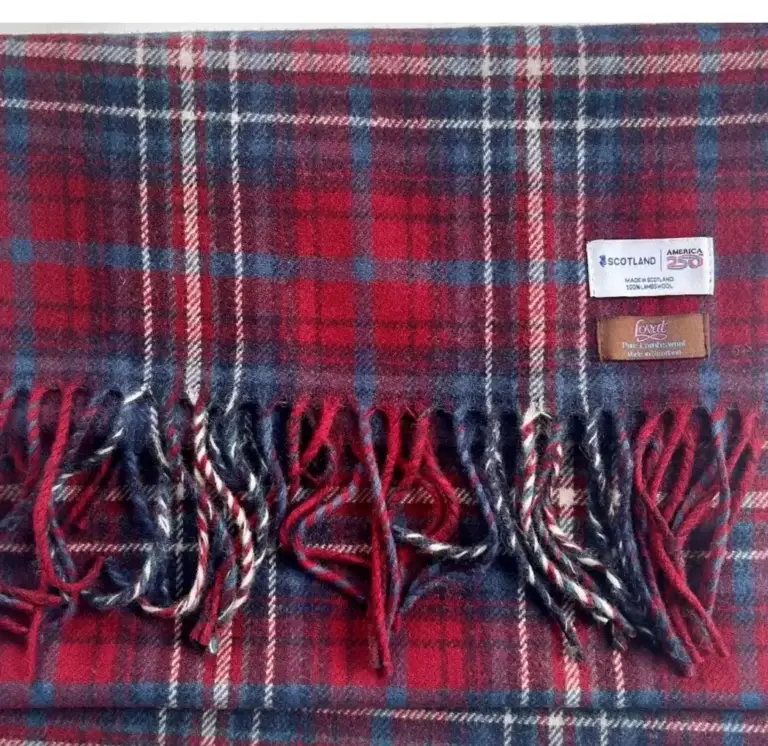
In the meantime, I learned that the state of Illinois has its own tartan. It is not much to look at. I’ll pass on that one. Earlier this year, though, a competition awarded a young college student the honor of designing a tartan to commemorate the 250th anniversary of the United States. Hers is a beauty. As we keep traveling through Scotland, I am on the hunt for a scarf of my own. Michael has already passed on the kilt idea.
More Kings and Clans
Our second tour of the day was guided by Douglas, whose full name carried five surnames, every one of them tied to his own clan lineage. Belonging to a clan is still a point of real honor here. Douglas, with red hair and fair skin, certainly looked as though he belonged in the stories he was telling. He was charming and humorous in his delivery during the tour.
This tour carried us through the Old Town, where we learned about the architecture, heard more history, discovered what a close actually is (a narrow named alleyway running between two buildings or the steps from one city level to the next), touched on the Presbyterians, and circled right back to kings and queens.
I had no idea that Mary Queen of Scots became monarch at six days old. Her father, James the Fifth, had just suffered a crushing defeat at the Battle of Solway Moss and came home gravely ill. He took to his bed with a fever, and when word reached him that his newborn was a daughter rather than the son he hoped for, he is said to have remarked that the Stewart line began with a lass and would end with a lass. He died within the week, and his infant daughter inherited a throne she could not yet understand. Her reign turned out to be every bit as storied and difficult as that beginning suggested, and it did not end well.
How did the historians keep up with all of this?
Fascinating History, Remarkable Hospitality
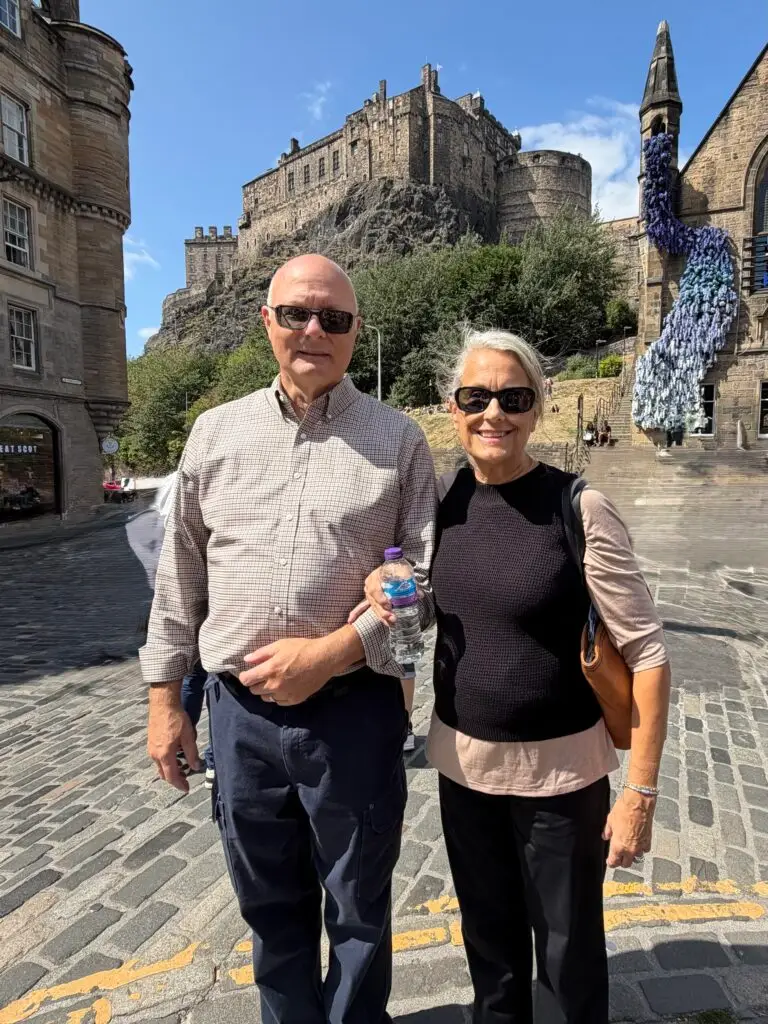
Three enjoyable hours later, after learning so much fascinating history about Scotland and spending the afternoon with five other travelers who turned out to be just as interesting as the history itself, our tour came to an end.
What Michael and I both took away from these two guides was how many twists and turns run through the history of this country, and how the Scots endured every one of them. The blending of peoples and languages makes this country complicated, joyous, fierce, and welcoming all at once.
As we move through the different regions of the country, we keep meeting the same thing. A joke here, a smile there, a quick word of kindness from nearly everyone we encounter. They love to tell their stories, and they love to hear ours. In that alone, Scotland is a magical place to experience.